Please click here to check who's online and chat with them.

Find Verified Water Filters Water Treatment Plants Suppliers, Manufacturers and Wholesalers

Top Supplier Cities : Tashkent   -   Nukus  
Feb-09-23
Supplier From Tashkent, Uzbekistan
GOLD Member
Jul-24-25

Sesame, 1st

$2 - $3 / Kilogram (FOB)
MOQ: 10 tons  Metric Tonnes
Sample Available
Supplier From Tashkent, Uzbekistan
 
Sesame is a family of annual and perennial herbaceous plants, an oilseed crop. Homeland - Africa. The stem grows upright, gives off 4-6 long lateral branches. Leaves are simple, crowded, solitary or opposite, hairy. The flower is 1-3 in the leaf axil, 5-petaled. The fruit is small, elongated, flat, hairy. There are 20-300 pods in one bush. The pod is 2- or 4-lobed.

Length 3-5 cm. The weight of 1000 seeds is 2-5 g. The color of the seed is light or dark brown, sometimes white and black. Sesame is a heat-loving, light-loving, short-day plant. The seed germinates at 15-16�°�¡. The growing period is 90-110 (120-150) days.

Sesame is one of the most valuable oil crops, its seeds contain 65% oil, 16-19% protein, and 16-17% non-nitrogenous substances. Sesame grows abundantly on fertile, fertile land that has been freed from grain crops. Cultivation is carried out 2-3 times during the growing season, additional feeding is given twice with 40-50 kg of nitrogen per hectare. Water 1-2 times before flowering, 2 times during flowering.

Currently, 3 varieties of sesame are grown in Uzbekistan.

Black prince;
Tashkentsky -122;
Sadaf.
Regions recommended for planting: since 2012, it has been included in the State Register for planting on irrigated lands across the Republic.

The average height of the plant is 120-150 cm. The average vegetation period is 110-120 days. The average weight of 1000 seeds is 2.6-3.0 g, the seeds are black. Resistant to grain spillage.

Average yield: 17.6 s/ha. The amount of fat in the grain is 63%, oxyle is 24%. During the test period, there were no cases of damage by agricultural diseases and insects.

Recommended for planting in all regions of Uzbekistan.
GOLD Member
Jul-24-25

Saffron, 1st

$2 - $5 / Gram (FOB)
MOQ: 1 kg  Cans
Sample Available
Supplier From Tashkent, Uzbekistan
 
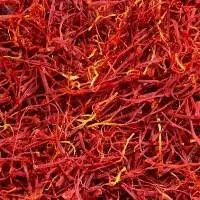
Scientists of the botanical Garden of the Academy of Sciences of Uzbekistan conducted research on the feasibility of cultivation of this plant in our country. The results showed that the saffron fully corresponds to soil and climatic conditions of the republic, can be grown in the mountain and foothill areas of the Fergana Valley, Tashkent, Samarkand, Kashkadarya, Surkhandarya, Navoi and Jizzakh regions, and in inter-rows in vineyards and gardens. In complementary medicine, saffron has long been used for treatment of many diseases. Abu Ali ibn Sino wrote that saffron tincture improves eye vision, the work of the heart and respiratory system.

In the course of scientific research, domestic scientists revealed that climatic conditions of the country allow growing such valuable medicinal plants as Alexandria leaf, valerian medicinal, madder dye, lavender medicinal, erva, rosemary officinalis, and others. The proposals on the establishment of pilot plantations of these plants have already been submitted. They are capable of replacing imports, and are demanded on the external market. The project would trigger the creation of a separate industry in agriculture specializing in the procurement of saffron and other medicinal plants, and thereby the provision of pharmaceutical, perfumery and food industries with domestic raw materials.
GOLD Member
Jul-24-25

Black Cumin, 1st

$1 - $2.30 / Kilogram (FOB)
MOQ: 10 tons  Cartons
Sample Available
Supplier From Tashkent, Uzbekistan
 
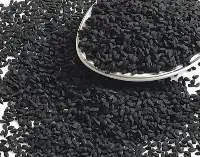
Black cumin (Nigella sativa L., Family: Ranunculacae) is an annual plant native to Egypt and the Eastern Mediterranean, mainly grown in arid and semi-arid areas including the Mediterranean, Middle East, central Europe and western Asia. Black cumin is very popular in traditional medicine and industrial pharmacology, as well as in cuisine and food products as a spice. It is now widely used in traditional medicine for asthma, bronchitis, rheumatism head and back pain, hypertension, and has also been utilized in the treatment of skin and eczema diseases . Furthermore, its essential oil and fatty oil are used in cosmetics and pharmacy.
Dec-21-22
Supplier From Tashkent, Uzbekistan
Supplier Of Grains & Cereals   |   Spices   |   Rice   |   Pepper   |   Canned Beef   |   Mineral Water   |   Food Products   |   Edible Oils   |   Fresh Carrot   |   Jams & Jelly   |   Berries   |   Canned Food   |   Basmati Rice   |   Canned Fruits   |   Raisins   |   Fresh Onion   |   Blackberry   |   Canned Vegetables   |   Plum   |   Strawberry   |   Peach   |   Raspberry   |   Salt   |   Fresh Fruits   |   Fresh Vegetables   |   Dry Fruits & Nuts   |   Apricot   |   Chickpeas   |   Pulses   |   Canned Meat
 
canned products, such as

1. Canned pilaf. We present our national dish plov in cans directly . Composition:
Rice, meat (beef, lamb), vegetable oil, carrots, chickpeas, onions, salt, black pepper, raisins, spices, water. Shelf life - 2 years. Packing: cans of 325g, 525g.

2. Vegetable preservation:
- Canned cucumbers
- Canned tomatoes
- Assorted vegetables marinated
- Canned vegetable lecho
- Squash
- Vegetable mash
- Eggplant mash
- Adjika canned
- Pickled garlic
Packaging: glass jars of 0.43l, 0.72l, 1l, 2l and 3l.

3. Fruit jams:
Raspberry, Apricot, Strawberry, Blackberry, Plum, Peach, Quince, Fig, Cherry, Melon.
Packaging: glass jars of 0.43 l

4. Fruit compotes:
Plum, Peach, Cherry, Apricot.
Packaging: glass jars of 2 liters.

5. Fruit jams:
Raspberry, Apricot, Strawberry, Blackberry, Plum, Peach, Quince, Fig, Cherry, Melon.
Packing: glass jars of 0.43 l, 0.72 l, 1 l.
All products manufactured by us comply with government standards.
We invite potential customers to cooperate.
22 Water Filters Water Treatment Plants Suppliers
Short on time? Let Water Filters Water Treatment Plants sellers contact you.
GOLD Member
Jul-24-25

Almond, 1st

$5 - $7 / Kilogram (EXW)
MOQ: Not Specified
Supplier From Tashkent, Uzbekistan
 
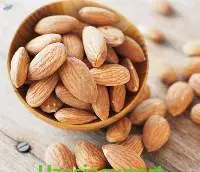
Almonds have been growing since ancient times on the mountain and foothills of Tashkent, Jizzakh, Samarkand, Kashkadarya and Surkhandarya regions. In addition, to the newly planted almond groves, it also grows wild in natural forests.

Almond varieties are very valuable and are used in many sectors of the economy. It is useful to eat unripe almonds that have not hardened, add sugar or make jam. Sweet-core almonds have 40-70% fat, 20-25% protein, 6% sugar, are rich in various nutrients, organic substances and are a valuable raw material for the confectionery industry. Kunjara contains up to 10% fat and a large amount of protein and carbohydrates. In addition to fat, protein and sugar, almonds contain 2-2.5% amygdalin, which is widely used in the perfumery industry and medicine. Almond peel is used in the preparation of gas-absorbing charcoal, in winemaking to give the wine a fragrant aroma, quality and flavor. Almond husk ash contains up to 40% potassium and is used as a fertilizer. Almond wood is very hard and beautiful, so it is a valuable item in carpentry and machinery.

Almonds are harvested at the age of 3-4 years, and produce highly from 12-18 years to 35-40 years. Properly covered, it will withstand a great deal of adverse conditions for up to 60-100 years. Almond seedlings are planted in autumn or early spring. It does not like thickness because it requires light, and grows well in soils with lime content. The yield of a bush tree ranges from 3-4 kg to 10-20 kg. According to the data, the most productive years were up to 30-40 kg.

In folk medicine, the mixing of sweet almond kernels with sugar is widely used in the treatment of diseases such as shortness of breath, dizziness.

Bitter almonds are not eaten, they are just used in medicine. Sweet almonds are good food.

This type of almond is used against freckles, spot hemorrhage, sunburn. It also treats the wrinkles on face. When sweet almonds are eaten, they make you fat.

Beneficial in earaches and ringing in the ears, especially bitter almond oil and its grind.

If the root of the almond tree is finely chopped and tied with vinegar or rose oil and placed on the forehead, it is beneficial for headaches. Bitter almond oil has a similar effect.
GOLD Member
Jul-24-25

Rice, 1st

$2 - $2.30 / Kilogram (FOB)
MOQ: 10 tons  Metric Tonnes
Sample Available
Supplier From Tashkent, Uzbekistan
 
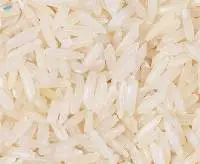
Uzbekistan was the former Soviet Union's largest producer of fruits and vegetables. About 15% of the total area is crop land. During the Soviet era, cotton was grown on almost half of all sown land. Cotton is grown in the crescent beginning in the Fergana Valley and extending south along the Tien Shan Mountains to Samarkand and Bokhara, and then west along the Amu Darya River. Rice, wheat, barley, and corn are important grain crops. Rice is produced on 48 specialized state farms, and about 85% of the rice crop comes from the southwestern part of Karakalpakistan and the Khorezm region. In 1999, over 4.3 million tons of cereals were produced. Sesame, tobacco, onions, flax, and various fruits are also grown. Figures released by the agriculture and water ministry suggest that these two northern regions alone were responsible for three-quarters of the 75,500 tonnes of rice Uzbekistan produced in 2003. The economy of Khorezm Region is primarily based on cotton. Cotton is by far the main crop, although rice production has increased significantly in the last several years (though the Uzbek government discourages rice production near to deserts, over water usage concerns). There are also many orchards and vineyards, melon and gourd plantations and potato fields. Khorezm Region is famous for its "gurvak" melon in Uzbekistan. Rice is grown in summer under flood irrigation mostly with winter wheat. The Uzbek Research Institute of Rice (UzRI-Rice) is responsible for rice crop improvement and seed production. The Institute was established in 1971 with the main objectives to conduct basic and applied research on rice and legume crops; to provide basic information and research production problems using multidisciplinary approach; to increase overall rice production and improve grain quality in Uzbekistan thereby raising the living standard of farmers and the development of the nation.
Dec-29-16

Mineral Water

$0.10
MOQ: Not Specified
Supplier From Tashkent, Uzbekistan
 
Natural Mineral water
GOLD Member
Jul-24-25

Adras Fabric, 1st

$1 - $5 / Meter (FOB)
MOQ: 1000 meters  Meters
Sample Available
 
The ancient cities of Central Asia, along which the Silk Road passed, have always been famous for the production of exquisite fabrics. The centers of Uzbek weaving were and remain Bukhara, Margilan, Namangan, Kokand and others. Today, these places are famous for the beauty of hand-made silk not only throughout the country, but throughout the world. Centuries-old traditions of hand-made silk and cotton fabrics have been an integral part of national clothing, culture and interior design.

A special place is occupied by traditional fabrics made according to an ancient technology, which is called â??ikatâ?? in the West. The name comes from the Indonesian verb "mengikat" which means "to bind". This sophisticated weaving technique is performed entirely by hand and consists in the fact that the threads of the fabric are tied into bundles and dyed in certain colors. Then, when the fabric is woven, a pattern is drawn on it. In Uzbekistan, this technique is called "abrband", which means - a tied cloud.

There are several legends associated with the emergence of this weaving technique. According to one legend, once an artist was sitting on the bank of the river. The sky and clouds reflected in the river. The artist drew attention to the play of colors shimmering on the water surface and how the current changed the shape of the clouds. He sketched all this and showed it to the weavers, who tried to reproduce it on the fabric. Later, the word "abr" (which translates as "cloud") began to be used in the designation of the style of thread dyeing in traditional fabrics, thus the fabrics began to be called abr, and the weavers were called abrbands.

The silk fabric itself varied in the quality of the silk and in its composition. A fabric made from pure silk is called shoi, satin, podshohi. And the fabric made of cotton and silk is called adras, bekasab, pasma, banoras.

Abr patterns were distinguished by their diversity. Each school of silk weaving was famous for its artistic ornament. Each pattern was named after the shape it resembled. The most common were: tumorcha (amulet), tarok (comb), gajak (decoration), lesson (sickle), bodom (almond), darakht (tree), anor (pomegranate), oy (moon), shoh (horn), nogora (timpani), chakirim (echo), kapalak (butterfly), ilon easy (snake trail), chayon (scorpion), etc.

Modern ikat patterns also often feature traditional Uzbek jewelry, such as teardrop earrings and triangular pendants (tumor). When an Uzbek girl got married, she had to wear the best jewelry that indicated the wealth of her family. It was said that if a girl could not walk under the weight of jewelry, then she was from a very wealthy family. However, decorations were very expensive and without them, the wedding ceremony was considered shameful, so to solve this problem, people began to buy ikat with images of decorations.
Aug-21-19
Supplier From Tashkent, Uzbekistan
Jun-27-19
Supplier From Tashkent, Tashkent, Uzbekistan
Nov-29-20

Biohumus

$0.60
MOQ: Not Specified
Supplier From Tashkent, Uzbekistan
 
Ecologically clean, biologically active organic fertilizer which is derived from the accelerated biological degradation of organic wastes by interactions between Red Californian worms and microorganisms.

It is a crumbly fertiliser with a pleasant scent and looks like black soil. It contains necessary micro and macronutrients, enzymes, vitamins, humic substances and hormones necessary for plant growth and development. It is loaded with the microorganisms which create and maintain healthy soil.

Biohumus can directly be mixed with your potting or garden soil, immediately or throughout the gardening season. It can be used during growing of seedlings, spring and autumn fertilization and surface application during the vegetation.

Fertilization norm of Biohumus is 3.5-6 tons for 1 ha of soil and 4.5-6 tons to make the dead soil alive. Overfertilization with biohumus is impossible: the more, the better.

To fertilize your home plants just spread biohumus on the soil surface. It is preferable to mix it with the soil around the plant by hoeing it, and then water. During transplanting insert 150-200 grams of biohumus into each hole, which will give plants a great start in growth and development.

0.6$ for kg.
600$ for 1 tons.

Min order 20 Tons.
Aug-11-20

Industrial Pumps

$25.00K
MOQ: Not Specified
Supplier From Tashkent, Uzbekistan, Uzbekistan
 
Industrial pumps, pump set systems BB type, OH type, VS type, API 610 standard and split casing pump, vertical turbine pumps for water application.
Dec-10-21

Sulphur

$300
MOQ: Not Specified
Supplier From Tashkent, Tashkent, Uzbekistan
 
CIP Bandar Abbas(IR BND) -350$
CIP Mumbai port(INDIA) - 350$
Mass fraction of sulphur - 99.95%
Mass fraction of ash - 0.022%
Mass fraction of organic matter - 0.023%
Mass fraction of acids in terms of sulfuric acid - 0.00025%
Mass fraction of water - 0.01%
Jan-28-14
Supplier From Tashkent, Uzbekistan
 
Plastic raw material for producing :
Caps and closures with torque free property , housewares , high fludity , pipe extrusion pe 100 class, industrial and pressure pipe ,
Gas pipe, drinking water pipe, relining , fittings , small blow moulding , bottles , containers (up to 5 lit), packaging of pharmaceuticals & surfactants , film extrusion , carrier bags , counter bag , wrapping films , enhanced ultra thin film...

Packing in 25kg bags.
Sep-29-22
Supplier From Tashkent, , Uzbekistan
Dec-29-16

Fruits

$1
MOQ: Not Specified
Supplier From Tashkent, Uzbekistan
 
We are Uzbekistan based company. We can supply mineral water from Uzbekistan.
We can also supply Beverages and foods(vegetables, honey and fruits) like honey, green mung, Green grapes, Grapes tayib, black grapes, persimmon, quince, apple golden, apple green, melon(sweet melon), carrot, lemon, beans red, beans white, chick-pea, beans red-white, onion and others.
If you would like to import from Uzbekistan, we will be pleased to cooperate with your company.
Dec-29-16

Vegetables

$1
MOQ: Not Specified
Supplier From Tashkent, Uzbekistan
 
We are Uzbekistan based company. We can supply mineral water from Uzbekistan.
We can also supply Beverages and foods(vegetables, honey and fruits) like honey, green mung, Green grapes, Grapes tayib, black grapes, persimmon, quince, apple golden, apple green, melon(sweet melon), carrot, lemon, beans red, beans white, chick-pea, beans red-white, onion and others.
If you would like to import from Uzbekistan, we will be pleased to cooperate with your company.
Nov-09-24

Peanuts

MOQ: Not Specified
Supplier From Tashkent, Uzbekistan
 
Peanuts - Peanuts are high in protein, in 100 grams of raw peanuts: calories 567, water 6.5% protein 25.8 grams, carbs 16.1 grams, sugar 4.7 grams, fiber 8.5 grams, fat 49.2 grams. Daily use of peanuts stimulates brain activity, improves digestion and removes harmful substances from the body. They can be consumed raw, sprouted and roasted
Nov-07-23
Supplier From Tashkent, Uzbekistan
 
Chemical Analysis Results

1 mass fraction of sulfur% not less than 99.95
2 Mass fraction of water% no more than 0.19
3 residue on sieve 014N according to GOST 2.5
4 mass fraction of ash, % not more than 0.033
5 mass fraction of organic substances 0.042
6 mass fraction of acids in terms of sulfuric acid, % not more than - 0.0028
7 grinding fineness from 400 to 600 m/�µn
8 Type of packaging - polypropylene bags of 50+/-1 kg
22 Water Filters Water Treatment Plants Suppliers
Short on time? Let Water Filters Water Treatment Plants sellers contact you.
Explore Water Filters Water Treatment Plants related import export discussions